






Quotes for Public Speakers (No. 164) – John Kennedy

John F. Kennedy (1917-1963) 35th President of the United States

John F. Kennedy (1917-1963) 35th President of the United States

“The only reason to give a speech is to change the world.”

— John F. Kennedy

Posted in Quotes for Public Speakers | Tagged , , , | 3 Comments

Behind Every Champion

One week ago, I achieved a goal that had been several years in the making. In Antwerp, Belgium, I won the Toastmasters International Speech Contest for District 59, which comprises 18 countries in Continental Europe. I now move on to the World Championship Semi-Finals, which will be held in Cincinnati, Ohio in August. If I win my Semi-Final, I will compete in the World Championship of Public Speaking two days later.

The road to the Toastmasters World Championship is long and tough and filled with its fair share of ups and downs. Every year, 30,000 people enter the International Speech Contest. We are now down to the final 88. (Reminds me of the Crazy 88 from Kill Bill!) The road has narrowed appreciably and it has just become a lot steeper!

DSC_8021

It was my fourth attempt at the International Speech Contest. On three previous occasions, I made it to Districtfinishing second twicebut always fell just short. Over the years, I had the good fortune to win the other three Toastmasters District-level contests (Evaluation, Table Topics and Humorous) but the International seemed to hover, tantalizingly, just out of reach. 

However, in Antwerp, things all came together. I felt good during the Semi-Finals on the Friday and better during the Finals on the Saturday. For a little over 7 minutes, I got to share a message I care about with 400+ people. They laughed, they cried, they were with me the whole time and I enjoyed every second of it.

When the results were announced at the Gala Dinner, the applause was thunderous. When I finally made my way to the stage, I had to give an acceptance speech. It was quite emotional, but as I said then, the emotion had  less to do with the actual winning than it did with my appreciation for all of the love and support and encouragement I have had throughout this journey from so many people.

And that’s what this post is all about.

On 6 March 1981, Walter Cronkite, one of the greatest news anchormen ever, read the evening news for the last time. Growing up in southern Ontario, we would frequently watch the news from south of the border. As as young boy, I remember my parents, grandparents, aunts and uncles watching intently whenever Cronkite read the news. 

His retirement was a big deal in North America. During his final sign-off (which you can watch below), Cronkite said something which struck me at the time and which I remember to this day. Pay particular attention to the 10 seconds from 0:30 to 0:40.

“And anyway, the person who sits here is but the most conspicuous member of a superb team of journalists: writers; reporters; editors; producersand none of that will change.”

So it is with the person who wins a speech contest (or most any contest, for that matter). Yes, when a speaker is on stage, it is all up to him or her. Nobody can help. But, in order to make it to the stage in the first place, a speaker needs lots of help, lots of feedback, lot of encouragement and lots of support.

Behind every champion are many others who have helped in some way. I have had tremendous support from so many people, so now it is my turn to say “Thank You”.

  • To my wife, Julie and daughters, Alexandra and Kristen. For listening to these speeches over and over, and for your unwavering support of my pursuit of public speaking excellence. I love you more than I could ever express in a hundred speeches.
  • To my parents; my sister, Karen and her husband, Bill; my brother, Greg and his wife, Amy. For all of the love and support and encouragement from the other side of the Atlantic Ocean.
  • To the members of the International Geneva Toastmasters Club. A fantastic group of people. We come from all corners of the world and have a very successful club, with meetings regularly attend by 30 or more people. You have always given me great support and feedback whenever I have competed and it means so much. People like Bryan Johnson (Club President), Gerard Penalosa (Past President), Philip Selby (DTM and founder of our club), Ginny Rogers, Robert O’Riordan, Aziza Mohammed, Andrey Rogov and so many more.
  • To Ben Parsons. Ben has been the heart and soul of our TM Club for many years now. He has been Club President, Area Governor and Division Governor (which covers all clubs in Switzerland). He has been a leader in many ways and he has been instrumental in getting others to step up and assume leadership roles. Ben has always given me great feedback on my performances. And he has also made sure that I keep things in perspective. I will always remember the final morning of the 2012 conference in Poznan, Poland where we shared a room. Like many others, we had been up very late at the Gala Dinner the previous evening. We were short on sleep and slightly hung over. I had won second place in the International Speech Contest and the trophy was on a table. When the alarm went off Ben got up, shuffled over to the table, picked up the trophy and read, “District 59 – International Speech Contest – Second Place – Poznan 2012″. He paused a moment and then said, “They should have written, ‘Second Place Again’.” Best line of the entire weekend!
  • To Laura Penn. Laura is also a member of my club and the founder of a new club in Nyon, about 20 km from Geneva. In Antwerp, Laura won First Place in the Speech Evaluation Contest. It was her first time on the District podium; I am certain it will not be her last. Over the years, Laura has been a friend and competitor and she has forced me to be sharp from the very beginning of the contest season. No sooner had I advanced than she offered her help. She arranged for me to give my speech at her club in Nyon to help me practice for the Division Contest and gave me great advice on voice and gestures.
  • To the Toastmasters of Switzerland, Division E in District 59. People like Jack Vincent, Silvana Wasitova, Carina Schey, Thomas Skipwith, Mark AdlerCindy PiccoloSandra Van de Cauter, Fouad Alame, Janene Liston, Douglas MacKevett, Keith Westmacott, Manuel Gomez, Natalia FilchakovaMarina Riedi and many more.
DSC_8292

From left to right: João de Mendonça (District Governor), Antonio Meza (3rd Place), Me, Christine Roos (2nd Place), Sabine Schoenangerer (Contest Chair)

  • To the Toastmasters of District 59. We have an incredible District that covers most of Continental Europe. We stretch from Poland to Portugal, from Sweden to Switzerland and most places in between. I have had the good fortune to be able to visit clubs and attend events across Europe and I have always been treated with the utmost kindness. My thanks to people like Peter ZinnJoão de MendonçaMorag MathesonJerzy ZientkowskiCeleste BrownJustyna HołubowiczRui HenriquesBill Monsour, Jorge CrespoPeter KentonTuire Vuolasvirta, Ana Maria Cunha and many others for all the support.
  • Thanks also to Raquel Belo, Antonio Meza, Ibbe Mohammed, Christine Roos and Daniel Van Doorn, my fellow District Finalists, and all those who reached the District Semi-Finals, for a great contest full of outstanding speeches. Your excellence pushes me to strive for excellence.
  •  A special note of thanks to four very special friends in District 59:
    • Mel Kelly. Mel is from Ireland and lives in Germany. He is the Iron Man of District 59, having reached the District Finals in different speech contests an incredible 19 times. For his friendship, his sense of humour and his willingness to analyze dozens of speeches with me on Skype. The last two contest years, Mel and I helped each other with our speeches. Each time, we both reached the District Finals, which meant that we were direct competitors. Each time we continued to help each other with our speeches. We knew that nobody would fault us if we stopped helping each other when we were in direct competition, but we said, “Where’s the fun in that?”
    • Bob Mohl. Bob is from the United States and lives in France. When it comes to speech-craft, Bob is a master. His insights and suggestions are always helpful. A past winner of the District International Speech Contest, Bob is a great coach. He knows exactly when and how to push a speaker and when to ease off.
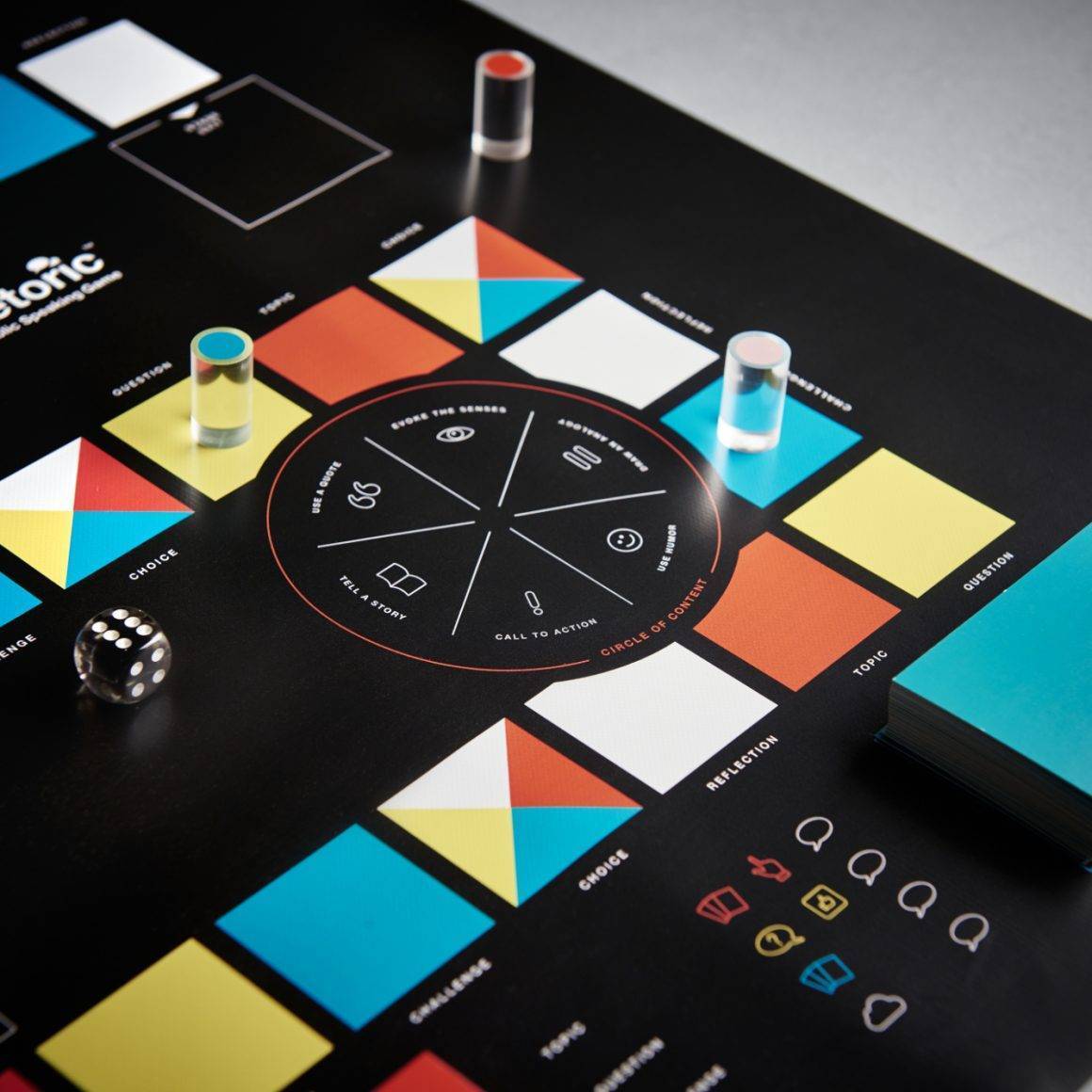
    • Florian Mueck. Florian is from Germany and lives in Spain. He is my partner with whom I developed the board game RHETORIC. In fact, it was Florian who came up with the idea and he invited me to come on board and work with him on the game. He is an incredibly generous person and has been a source of constant encouragement and inspiration.
    • Olivia Schofield. Olivia is from the United Kingdom and lives in Germany. In 2011, Olivia reached the Finals of the World Championship of Public Speaking. She gave an incredible speech but went overtime and was disqualified. Many people think that but for those few extra seconds, she would have been the World Champion. Olivia sets a stage on fire and she has been so supportive throughout my contest run, offering great advice on staging and voice.
  • Finally, a note of thanks to you, the readers of this blog. Your comments and support mean a lot and help me to stay focused and motivated.

Looking ahead, my focus is now Cincinnati. The World Convention takes place from 21-24 August 2013. A little over three months to prepare for the Semi-Finals and (I hope) the Finals. The challenge is incredibly exciting and I look forward to it, especially knowing all the people who are behind me. Many of them appear in the wonderful video below prepared by the Organizing Committee of the District Conference in Antwerp.

Photographs courtesy of Susanne Kischnick
Posted in Toastmasters | Tagged , , | 28 Comments

Quotes for Public Speakers (No. 163) – Richard Branson

Richard Branson - English Entrepreneur and Founder of Virgin Group

Richard Branson – English Entrepreneur, Founder of Virgin Group

“To be an impressive public speaker, you have to believe in what you are saying. And if you speak with conviction and you’re passionate about your subject, your audience will be far more forgiving of your mistakes because they’ll have faith that you are telling the truth. My answers aren’t always smooth and immediate, and often include a fair few ‘erms’ and ‘ahs’. But most audiences are far happier with a hesitant, sincere response than a speedy but superficial answer. Prepare, then take your time and relax. Speak from the heart.”

— Richard Branson

Photo courtesy of David Shankbone
Posted in Quotes for Public Speakers | Tagged , , , | 7 Comments

Six Public Speaking Lessons from Freddie Mercury

Freddie Mercury was the heart, the soul, the very essence of showmanship. The lead vocalist and lyricist of Queen had one of the most incredible unique singing voices ever. And his singing talent was matched, step for step, by his onstage flamboyance.

Over the years and across different musical styles, some singers have managed to achieve a magical blend of voice and onstage presence that places them in the pantheon of music. Frank Sinatra, Elvis Presley, Mick Jagger, Aretha Franklin, Luciano Pavarotti, Michael Jackson and Madonna come to mind. There are others, and Freddie Mercury has his place among them.

Have a look at this terrific six-minute clip from Queen’s epic 1986 concert at Wembley Stadium. This version of Under Pressure is my all-time favourite. And the two-minute set-up by Freddie? Pure Mercury magic from start to finish.

Here are six public speaking lessons that we can glean from his performance:

1. Stay hydrated.

Freddie always had plenty of water on hand.  Should you, because you never know when dry mouth will strike.

Be sure that the water is flat. The bubbles in fizzy water have a nasty habit of coming back up at inopportune times. Also be sure that the water is room temperature; cold water constricts the vocal chordsask any singer. (Oh, and if you decide to throw water at your audience like Freddie did, be sure that the people will enjoy it.)

2. Engage your audience.

Mercury’s two-minute riff with the audience at the start of the clip was incredible. He had over 70,000 people hanging (and singing) on his every word. 

Interacting with your audience is a great way to keep their attention and stimulate their interest. Audience engagement is a subject that merits its own post at some point in the future. In the meantime, here are six quick ideas for interacting with your audience:

  • Ask a question.
  • Invite them to ask questions of you during the presentation. Alternatively, let them know that there will be a Q&A session. But not at the end of your presentation!
  • Have them discuss an issue in groups of two to four people and then have them report back to entire group.
  • Give them a writing exercisewhether to share or notbased on the subject that you just covered.
  • Lead a group activity.
  • Have them participate in an exercise or demonstration.

WARNING: If, like Mercury, you decide to tell your audience to fuck off, be very VERY sure that you know what you are doing! ;)

3. Use vocal variety.

Freddie Mercury had an incredible four-octave musical range. And he knew how to use it. He could sing high, he could sing low and he could sing all points in between.

You certainly don’t have to stretch your voice to the extent that Freddie did (and most of us can’t). However, if you speak in a monotone, your speechand the audiencewill suffer. So vary the volume of your voice; raise and lower the tone at appropriate moments; speed up or slow down to emphasize a point; and pause at key moments to let your audience absorb what you have said.

4. Use the stage.

Freddie had a big stage and he used it to maximum effect. Left, right, front and back, he was all over the place.

When a speaker steps out from behind a lectern, she shrinks the distance between her and her audience. But the movement has to be purposeful and it has to be balanced with an appropriate amount of standing still. A good rule of thumb is to stand still while making a point, move a few steps during a transition, then “plant yourself” and make another good point. For other ideas on using the stage, check out these tips from my friend, Douglas Kruger.

5. Turn up the energy.

When Freddie Mercury was on stage, his energy was palpable and it was infectious. To get 70,000+ people singing and dancing, you have to give it everything you have.

Now, you will not likely want the same level of energy at your next presentation, but you will have to turn it up a notch or two if you want to captivate your audience. Because here’s a hard truth of public speaking: If you are not into it, the audience won’t be into it. If you do not come across like you are interested, why should the audience be interested? 

Spend some time thinking about why your presentation is important for the audience and then put some heart into conveying your message. You should not try and be anybody other than yourself, but when you are in front of an audience, even a small one, you have to be a bit bigger, a bit more energetic, a bit more enthusiastic than usual.

6. Have fun.

Freddie had fun. It showed and the audience had fun as well. It’s exactly the same with public speaking. And public speaking should be fun. It’s the payoff moment when you get to share your message with a room full of people. It’s a privilege to be able to do so and you should enjoy it. Just like Freddie.

UPDATE

Apparently readers in the United States cannot watch the video because it is blocked. If you click this link, you will be taken to a YouTube search page where other versions of the performance exist. I hope that one of them works for you.

Posted in Uncategorized | Tagged , , , , , , | 15 Comments

Quotes for Public Speakers (No. 162) – Carly Fiorina

Carly Fiorina - American Business Executive, Former CEO of Hewlett Packard

Carly Fiorina – American Business Executive, Former CEO of Hewlett-Packard

“For me the process [of writing a university philosophy paper] would begin with writing twenty pages. Then I’d edit to ten, then five and finally two. I finally would get to a two-page, single-spaced paper that I hoped didn’t merely summarize, but rendered all the fat out of a body of ideas, boiling it down to the very essence of its meaning.

“Two pages were not an easy, superficial abstraction of a work; they were the distillation of all the details of a work. Certainly the philosophies and ideologies left a deep impression on me, but the rigor of the distillation process itself, the exercise of mental refinement, the ability to say clearly in two pages what previously had been said in twenty—all were important new skills.

“Invariably, I learned that I understood the text much better when I finished this process than when I’d begun. Without knowing it at the time, I was developing an important management tool: how to understand and get from a seemingly overwhelming amount of information to the heart of the matter. And I was learning a leadership lesson: understanding and communicating the essence of things is difficult, takes a lot of thought, and has a big impact.”

 Carly Fiorina

Photo courtesy of Agência Brasil
Posted in Quotes for Public Speakers | Tagged , , , , , | 4 Comments

An Evening with Kofi Annan

One of the great things about living in Geneva is the variety of interesting people who visit the city. A little over a month ago, I was able to take in a great lecture by Hans Rosling. (You can read my posts about the event here and here and here.)

Kofi AnnanLast week, my wife Julie and I went to hear Kofi Annan, the former Secretary-General of the United Nations, speak at the Geneva Convention Centre. Annan has a foundation that is based in Geneva, but on this occasion, he was promoting his autobiography, Interventions: A Life in War and Peace.

Annan did not deliver a speech per se. Rather, the format was a conversation between Annan and Nicolas Michel, a Professor of International Law at the University of Geneva and the Graduate Institute of International and Development Studies. The two sat in chairs behind a low coffee table. Because the event was in a large auditorium, the organizers had a large screen on stage with a with close-up of the pair. (The pictures below were taken at the event and give a sense of the setup.)

Annan, as he was throughout his career, was poised and thoughtful. He shared personal stories from his childhood in Ghana and fascinating insights into his tenure as Secretary-General. And, he was balanced, touching on both his successes and failures.

Here are some of my observations about speaking before an audience in this format, either as the interviewer or the person being interviewed.

  • The energy level is somewhat lower than when a single person stands alone on stage. Both people are sitting in comfortable chairs and each shares some of the burden.
  • The format has a more personal and intimate feeling, which is perfect for someone of Kofi Annan’s stature who is there to reflect on some of the things that he has done.
  • 2013-03-26 19.13.51The event should be scripted, but with room for spontaneity. Interviewer and interviewee should meet beforehand to go over the topics to be covered; however, the interviewer should be prepared to delve into different issues raised by the interviewee in his responses. Preparation is especially important for the interviewer in order to be able to react in the moment.
  • The topics covered should be of interest to the audience. It is always about the audience! As most of the people in the audience were university students and, I suspect, staff members of the United Nations and other International Organizations, the speaker and the topics covered were perfect for the occasion.
  • A third party should introduce both the interviewee (who is the main attraction) and the interviewer (who plays an integral role). The same person, or someone else, should say a few words at the end to thank everyone. This was done at the event. 
  • Starting the interview with a personal question about the speaker is a nice touch that allows the audience to see a less well known side of the person, but one which influences who they become. Annan shared some interesting and telling anecdotes about growing up in Ghana at the time of its independence. He also shared a humorous story about the time a man approached him in a small restaurant in northern Italy to ask for an autograph. The man turned out to be Morgan Freeman.
  • The questions should not be too long. Some questions need to be set up with some background, and on the whole, Michel did a good job. But once or twice he spoke for too long and the point of the question became somewhat muddled.
  • The interviewer and interviewee need to be careful not to step on each other’s words. In personal conversations, people frequently start talking while their companion is still finishing a thought. But in a formal setting, the interviewer and interviewee are having a personal conversation in front of (and for) an audience. They should avoid talking over each other. This happened a couple of times with Annan and Michel.
  • A Q&A session complements this format nicely as it extends the conversation.
  • Have water (room temperature and flat) and pen and paper on the table for the participants. The latter is especially important should the interviewer asked for several questions and then turn them all over to the interviewee (as was the case).
  • Having the big screen behind Annan was most welcome. Unfortunately, there was a short lag between the sound and the picture, which was mildly annoying. Equipment checks are critical whatever the format of the speaking event.

Finally, here are some memorable lines from Annan that I was able to jot down:

  • In international relations, it is not always a question of legal niceties; there are also moral imperatives.
  • When we are asked to give up our civil rights in return for protection, do we even have any rights left?
  • 2013-03-26 18.50.39There are times when the Secretary-General of the United Nations has to be a Secretary and there are times when he has to be a General.
  • Governments cannot hide behind sovereignty and brutalize their own people. Some crimes are so shameful, disgraceful and unacceptable that we cannot sit back and  do nothing.
  • When leaders fail to lead, the people can make them follow.
  • Governments cannot do everything; civil society can and must play an important role in bringing about necessary changes.
  • There are times when you have to bring force to bear on issues of peace. However, if we look at war from a moral and ethical point of view, there is no winner.
  • The fact that you cannot intervene everywhere does not mean that you cannot intervene anywhere.
  • Human dignity is a fundamental right.
Posted in Analysis of a Speech | Tagged , , , , , | 2 Comments