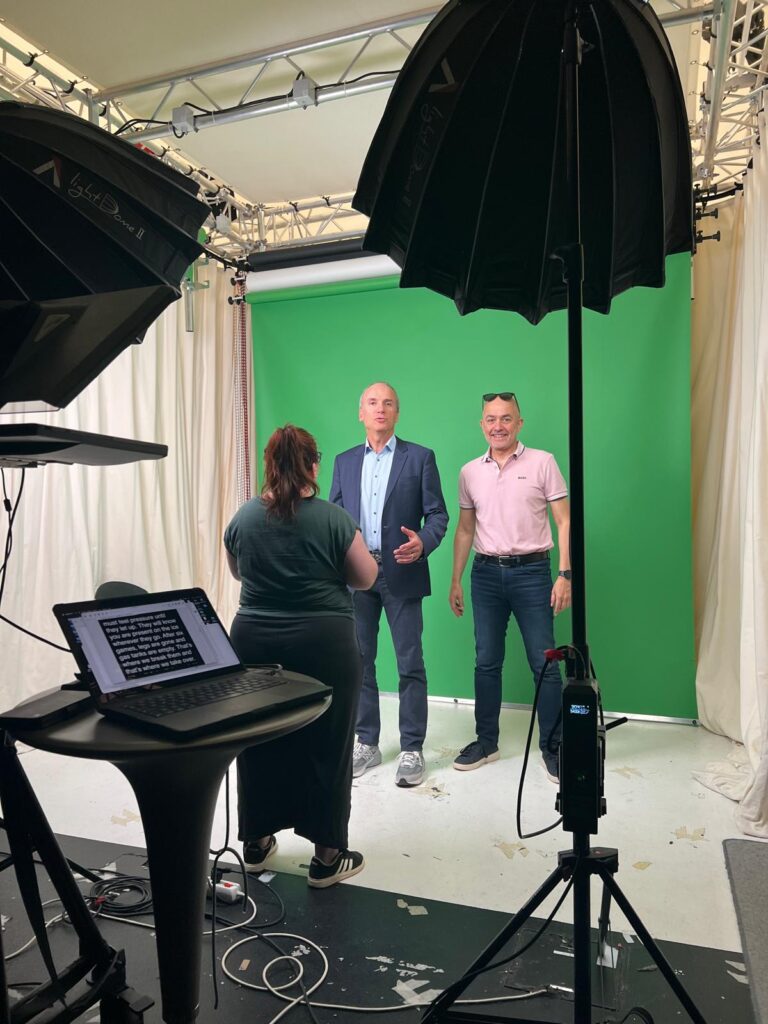

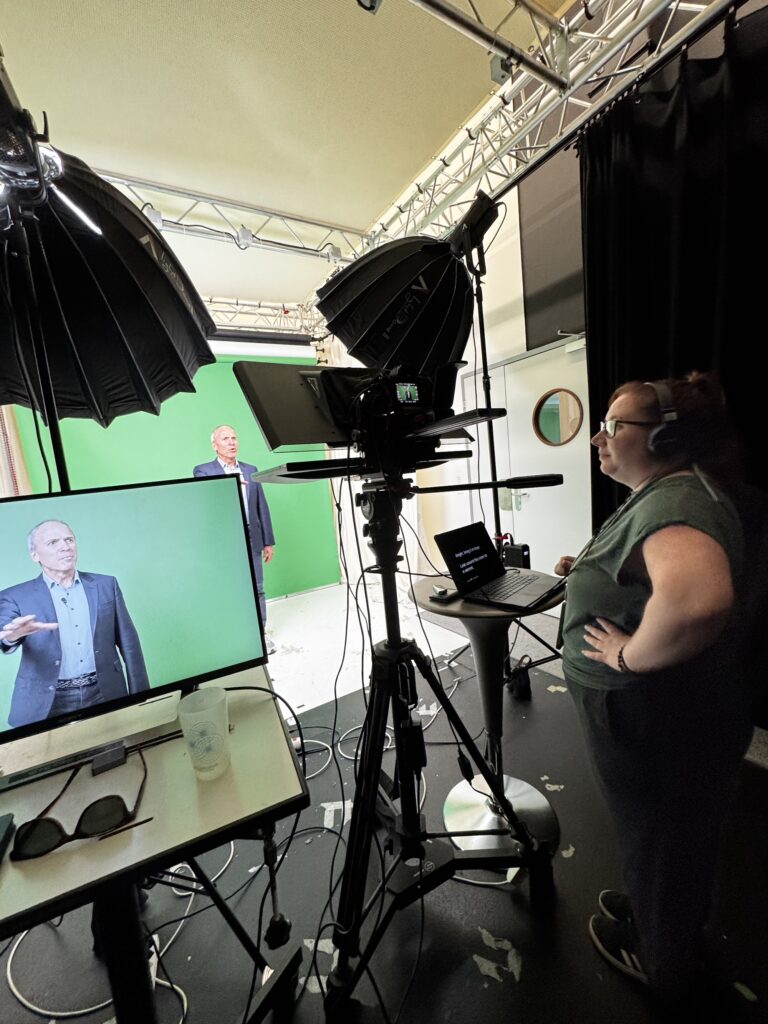
The biggest lesson from my first time using a teleprompter is that the goal is to make people forget you’re using one.
Recently, I had the chance to work with a teleprompter for the first time.
My friend and colleague John Antonakis invited me to participate in a research project in which I had to deliver two speeches.
To make the comparison fair, the two scripts had to be almost identical in length and timing. John and his colleague drafted the texts, and I was able to contribute some suggestions.
The experience was insightful and it taught me a lot about speaking with a teleprompter. (From now on, whenever I see a politician speaking with a teleprompter, I will have a greater respect for what they are doing.)
If you ever have to speak using a teleprompter, here are my top tips:
- Write conversationally. Write the way you speak, not the way you write.
- Rehearse beforehand. You don’t need to memorize the script, but you should know the flow.
- Change awkward wording. If a phrase feels unnatural when spoken, rewrite it.
- Test the scroll speed. It should match your natural speaking pace.
- Look through the text on the teleprompter, not at it. Focus softly on the lens behind the screen.
- Pause at punctuation. Commas and periods make your delivery sound more natural.
- Vary your voice. Monotone delivery is the biggest giveaway that you’re reading.
- Use a large font. Larger than you think you need.
- Break the script into short chunks. Long paragraphs are much harder to navigate.
- If you lose your place, pause calmly and find it. Panic is far more noticeable than a brief silence.
One final lesson for using a teleprompter
Whether you’re using a teleprompter or not, the main goal should always be the same.
You want to sound like a human being having a conversation with real people.
Naturalness beats polish every time.