

The title slide is usually the gateway to a presentation. And most presenters usually use it the same way.
The slide is up on the screen, the presenter walks on stage and then says what they are going to talk about by essentially repeating the information that the audience has already read.
It’s a missed opportunity.
The first minute of a presentation is disproportionately important.
Psychologists call it the primacy effect: people tend to remember what comes first more than what follows.
That’s why I often cringe when a speaker walks on stage, projects a title slide … and then spends the first minute repeating what everyone can already read. Sometimes the title slide is up before the speaker even comes on stage.
“Good morning. Today I’m going to talk about innovation in the age of AI.”
Ugh.
Your opening should create curiosity, tension, emotion, surprise.
Your first slide is a tool to help you do that, and you can use it in different ways.
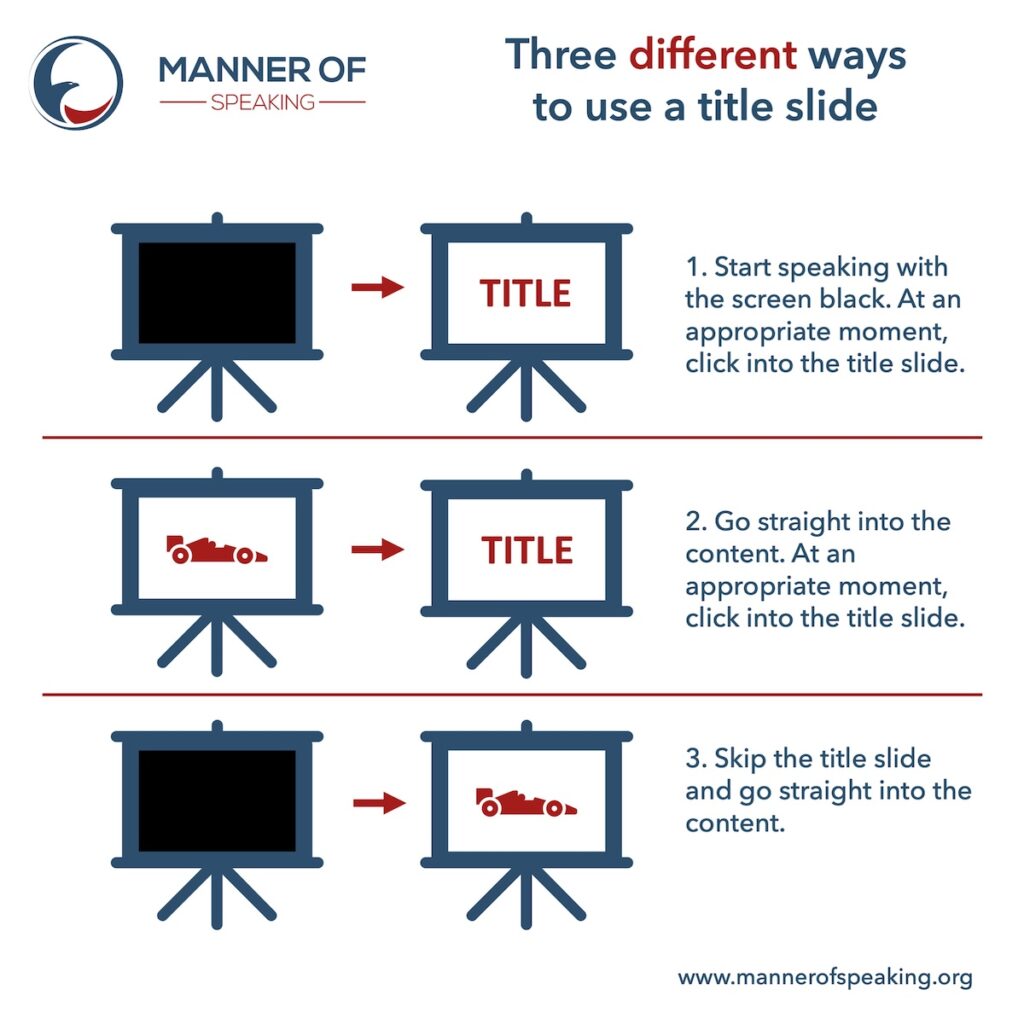
Sometimes the best approach is to begin with a black screen and let the audience focus entirely on your words.
Sometimes it’s better to open immediately with a powerful image or piece of content and reveal the title later once people are engaged.
And sometimes you can skip the title slide altogether.
There is no universal rule.
The key is to be intentional.
Ask yourself:
👉 What experience do I want the audience to have in the first minute?
Because audiences don’t decide whether a talk was “good” only at the end.
They begin judging from the start.
Strong openings create momentum for everything that follows.